
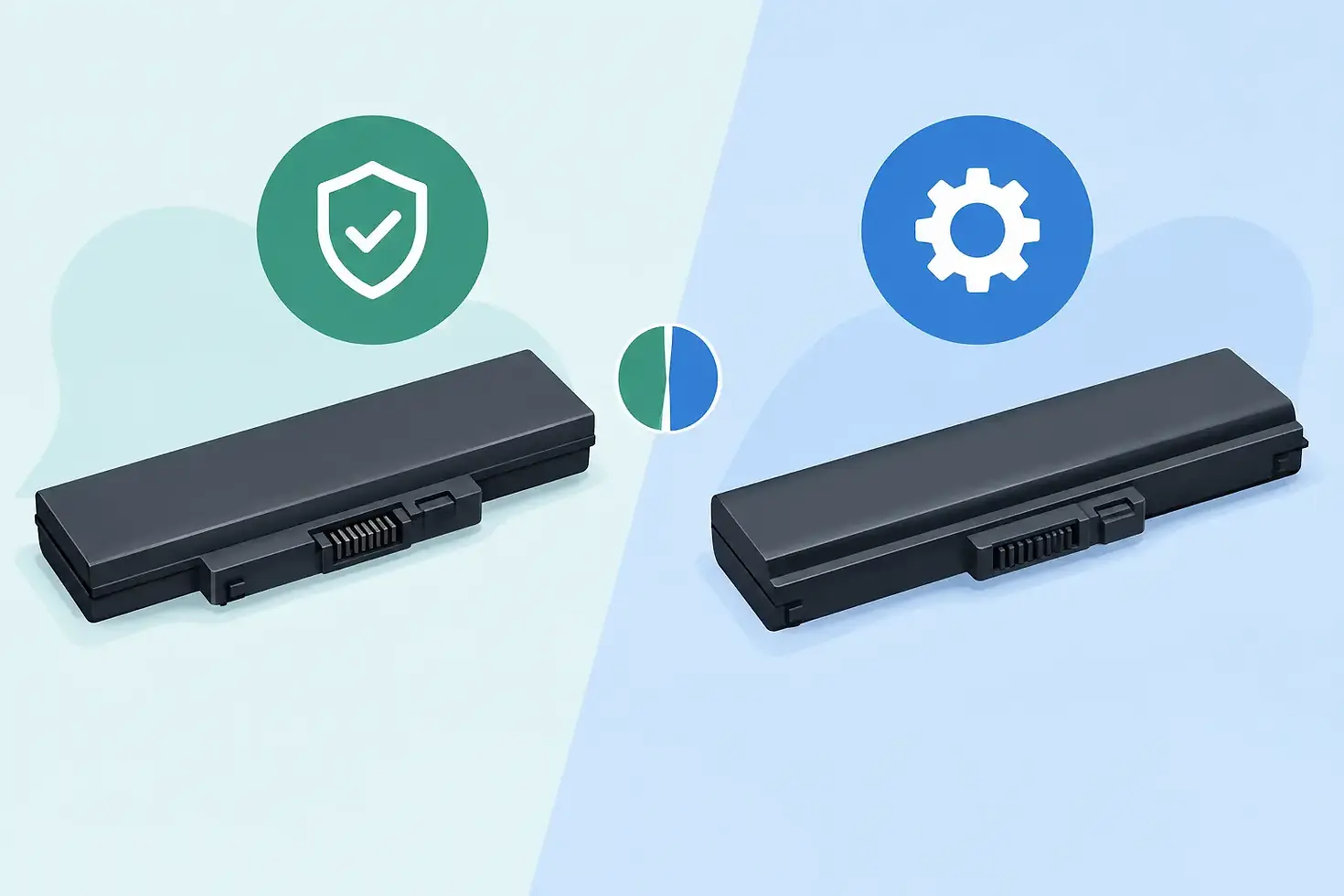
Genuine Versus Compatible Batteries: Which Is Best?
A flat battery can turn a normal day into a hassle fast. When you are comparing genuine versus compatible batteries for your mobile, tablet or laptop, the cheapest quote is not always the best value - but paying more does not automatically guarantee the right result either. The best choice depends on your device, how you use it and, most importantly, the quality of the part and installation.
What is a genuine battery?
A genuine battery is made by, supplied by or officially approved for sale by the original device manufacturer. For an Apple, Samsung, Google or Oppo device, that generally means a battery distributed through that brand’s authorised channels.
These batteries are designed for a specific model and are usually recognised by the device software without issue. They should meet the manufacturer’s capacity, charging and safety requirements. On newer devices, a genuine battery may also support features such as battery health reporting, service history and system notifications as intended.
The catch is availability and cost. Genuine parts can cost more, may not be readily available for older models, and some manufacturers limit access to particular parts or software pairing tools. If your device is still under the manufacturer’s warranty, or you want every original feature retained where possible, a genuine battery can be the sensible option.
What does compatible battery mean?
A compatible battery is a third-party replacement made to work with a particular device model. It is not supplied by the original mobile, tablet or laptop manufacturer. Compatible does not automatically mean poor quality, just as a genuine label does not remove the need for a proper diagnosis and careful repair.
There is a wide gap between a quality-tested compatible battery and a cheap, unknown part bought solely on price. Better compatible batteries use suitable cells, protection circuitry and connectors for the device. Poor-quality versions may have lower real capacity than advertised, inconsistent charging behaviour or a shorter working life.
This is why it pays to ask what standard the repairer uses, rather than accepting a vague description such as “premium battery”. A reputable repairer should be able to explain whether the battery is genuine or compatible, what warranty comes with the work and whether your device may show a parts notification afterwards.
Genuine versus compatible batteries: the real differences
For most people, the decision comes down to performance, software behaviour, price and repair confidence.
Performance and battery life
A good genuine battery should deliver the capacity and performance expected for that model. A high-quality compatible battery can often provide very similar day-to-day results, especially in an older device where the original battery has significantly degraded.
However, capacity figures alone are not the whole story. Battery life is affected by screen brightness, mobile reception, apps running in the background, software updates and charging habits. If a mobile is draining quickly because of an app fault or charging issue, fitting any new battery may not fully solve the problem. A proper assessment matters before replacing parts.
Safety and build quality
Lithium-ion batteries need to be treated seriously. They store a lot of energy in a small space, and a faulty, damaged or badly fitted battery can swell, overheat or fail unexpectedly.
Genuine batteries are built to the manufacturer’s specifications. Quality compatible batteries should also include the protection features needed to manage charging and temperature. The risk rises with unknown batteries, counterfeit products, recycled cells sold as new, or repairs completed without the correct tools and care.
A swollen battery is not a wait-and-see problem. If your screen is lifting, the back of your mobile is separating, or the device is getting unusually hot, stop charging it where practical and arrange an inspection promptly. Do not press the device closed or puncture the battery.
Software messages and features
This is one of the biggest practical differences on modern phones. Depending on the model and software version, a compatible battery can trigger a notification saying the part cannot be verified. Some devices may not show battery health information or may record that a replacement part has been fitted.
That message does not necessarily mean the battery is unsafe or that it will not work. It can simply reflect the manufacturer’s software verification process. Still, it is worth considering if battery health readings, official service history or maximum resale value are priorities for you.
Genuine parts may reduce the chance of these messages, but the outcome can also depend on the device model, the repair process and whether manufacturer-specific configuration is required. A clear repair quote should explain this upfront, not after the job is complete.
Price and value
Compatible batteries are often more affordable than genuine parts. That can make a real difference when you are repairing a family mobile, keeping a student laptop going, or deciding whether an older device is worth fixing.
The right question is not simply, “What is the cheapest battery?” Ask what you receive for the price: the part quality, technician workmanship, diagnosis, fitting process and repair warranty all count. A low upfront price can be false economy if the battery loses capacity quickly or the repair needs to be redone.
For a newer flagship device that you plan to keep for years, the extra cost of a genuine option may make sense. For an older mobile in otherwise good working order, a reliable compatible battery can be a practical way to get more life from it without overspending.
When a compatible battery is a good choice
A quality compatible battery is often suitable when the device is out of manufacturer warranty, the genuine part is unavailable or the repair budget matters. It can be particularly worthwhile for older iPhones, Samsung mobiles, tablets and laptops that still meet your needs but no longer last through the day.
It is also a reasonable choice when you use the device normally and are comfortable with the possibility of a software notification. What matters is that the replacement is model-specific, quality tested and fitted by a technician who checks charging, temperature and general operation before handing it back.
At Gadget Xperts, battery repairs are explained in plain terms so you know the part option, cost and warranty before work begins. That gives you a decision based on your device and budget, rather than a sales pitch.
When genuine is worth considering
Choose a genuine battery where available if your device is still covered by the manufacturer, you rely on original battery-health reporting, or you are concerned about preserving official parts history. It may also be the preferred path for a newer premium device with complex software pairing requirements.
Genuine can also suit people who want to keep a device for several more years and prefer manufacturer-supplied components. Just remember that a genuine battery is not a cure for unrelated faults. If your mobile only charges at a certain angle, switches off with battery remaining or gets hot during charging, the charging port, cable, charger or internal board may need attention too.
Questions to ask before approving a battery replacement
Before handing over your device, get clear answers on the essentials. Is the proposed battery genuine or compatible? Is it new and designed for your exact model? Will the device show a non-genuine or parts notification? How long is the repair warranty, and what does it cover?
Also ask whether the technician has checked for other causes of poor battery life. A good repair should not be guesswork. Battery condition can be tested, but usage patterns, charging faults and software issues need to be considered as well.
It is sensible to back up your mobile, tablet or laptop before any repair. A battery replacement should not erase your data, but a current backup protects your photos, messages and work files if an unrelated problem is discovered.
Look beyond the battery label
Genuine versus compatible batteries is not a simple good-or-bad comparison. A genuine part can be the best fit for one device owner, while a quality compatible option offers better value for another. What should never be compromised is safe parts sourcing, skilled installation, honest advice and a warranty that gives you confidence after the repair.
If your device is losing charge before lunch, bring the problem to a repairer who will check the cause first, explain the options clearly and help you choose a battery that keeps your day moving.



Comments