
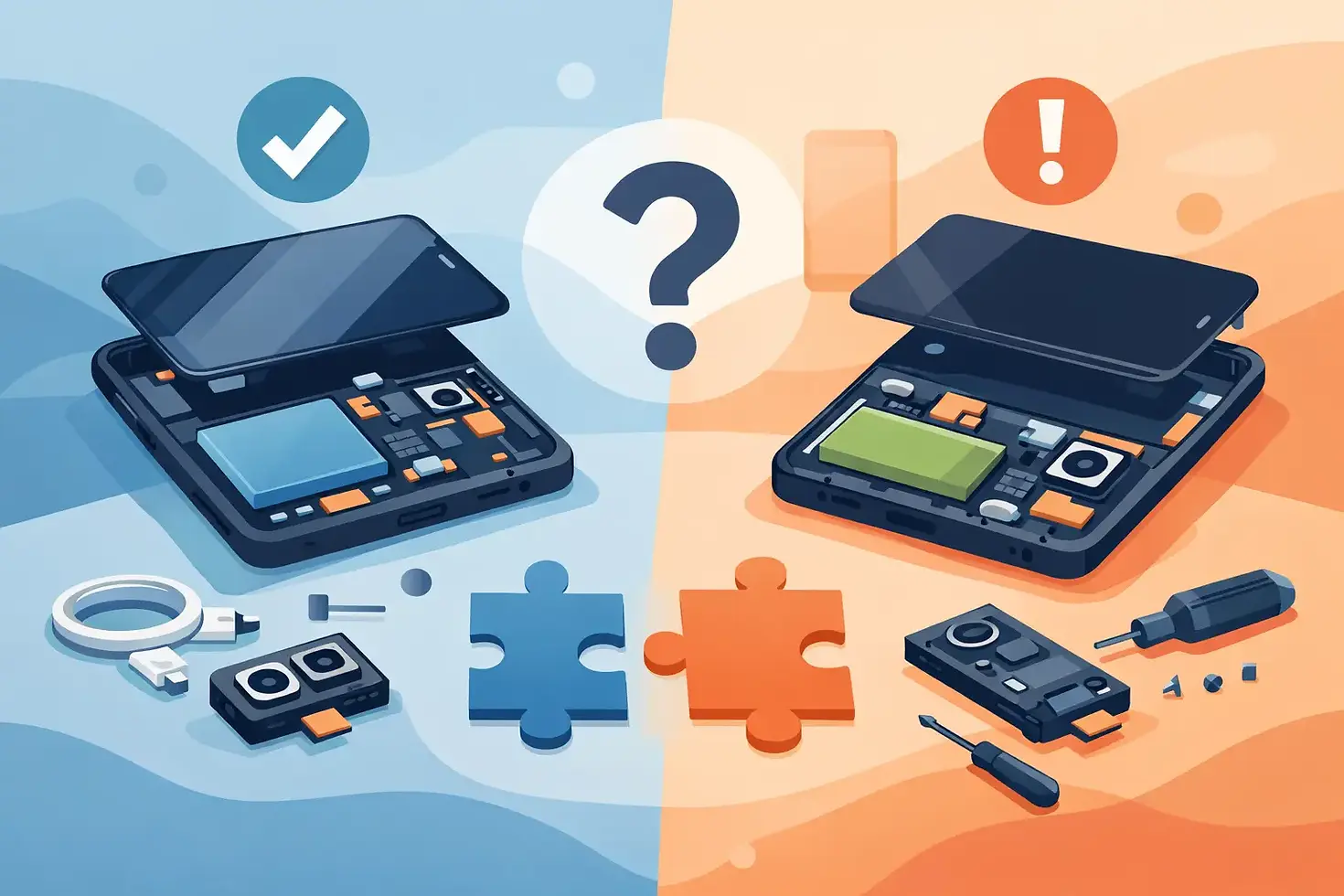
Genuine Versus Compatible Phone Parts: Which Fits?
A cracked screen at 8 am can turn into a work, school and family problem by lunchtime. When you are comparing genuine versus compatible phone parts, the right choice is not always the most expensive one. It is the part that restores the functions you rely on, suits your device and budget, and comes with clear workmanship support.
Genuine Versus Compatible Phone Parts Explained
A genuine part is supplied by, or made specifically for, the device manufacturer. Depending on the brand and model, this may be a manufacturer service part or a component sourced through an authorised repair channel. It is designed to match the original specifications for fit, performance and software communication.
A compatible part is an aftermarket component made to work with a particular phone model. Good compatible parts are not automatically low quality or unsafe. Reputable repairers use quality-tested components selected for reliable fit and everyday performance. The difference is that the part is not manufacturer-branded and may not have every identical material, calibration feature or specification of the original.
There is also a category that causes confusion: salvaged genuine parts. These are original components removed from another device. They can be useful in some cases, but their condition, remaining lifespan and compatibility need to be checked carefully. A new, quality-tested compatible part may be the more dependable option for certain repairs.
The key is to ask what is being fitted, how it is tested and what warranty applies. “Compatible” should never mean “unknown quality”.
When a Genuine Part Makes Sense
Genuine parts are often worth considering when your phone is newer, still under manufacturer cover, or has features that depend heavily on hardware and software pairing. This can apply to premium OLED displays, certain camera assemblies and biometric components.
With some newer devices, the phone may display a notification after a screen, battery or camera replacement if it cannot verify the part through the manufacturer’s system. The repair can still work properly, but the message may remain. On some models, calibration is also needed to retain particular functions or the best possible display and camera performance.
A genuine screen can be the safer choice if you care most about an exact display match. Original specification screens are more likely to closely match the phone’s brightness, colour accuracy, touch response and outdoor visibility. This matters for people who edit photos, use their phone for work all day, or simply notice a difference in display quality.
Genuine batteries can also be a sensible option where available, especially if your phone is relatively new and you plan to keep it for years. The benefit is confidence that the component is designed to the manufacturer’s stated standards. However, availability and pricing vary widely by brand and model, and a genuine option is not always necessary to get dependable battery life.
Where Compatible Parts Offer Better Value
For many everyday repairs, a high-quality compatible part is the practical answer. If a phone is a few years old, has already had plenty of use, or is used by a child, spending top dollar on a manufacturer part may not make financial sense.
A quality compatible screen can restore clear viewing, responsive touch and normal day-to-day use at a more manageable price. That can be the difference between repairing a reliable phone and replacing it before you need to. Compatible batteries can likewise provide a useful improvement when the original battery is draining quickly, shutting down unexpectedly or struggling to last through the day.
The word “quality” matters here. Very cheap, untested parts may have weaker glass, poor touch response, lower brightness, inconsistent battery capacity or a shorter lifespan. A proper repair shop does not simply fit the cheapest component available. It selects parts that have been tested and backs the work with a stated warranty.
For many Sydney families, compatible parts are a sensible way to keep several devices working without blowing the household budget. For students, commuters and small-business owners, getting a reliable repair completed quickly can matter more than paying extra for an identical manufacturer component.
What Can Change Between Phone Parts?
The biggest differences are usually seen in screens, batteries and cameras. A screen may vary in panel type, brightness, colour balance, glass strength and touch sensitivity. On OLED phones, lower-grade replacements can look noticeably different in dark mode or bright sunlight. On some models, an LCD replacement may be available where the original was OLED. It can reduce the repair cost, but it may be thicker, use more power and deliver a different picture quality.
Battery quality is about more than whether the phone turns on. A reliable replacement needs stable capacity, safe charging behaviour and a correct physical fit. A good technician also checks the charging port, charging cable and software condition before assuming the battery is the only problem.
Camera repairs need extra care. Focus speed, image stabilisation and portrait features can be affected if a replacement is poorly matched or incorrectly installed. The same goes for earpieces, microphones and proximity sensors. These small parts play a big role in calls, face detection and screen behaviour during a call.
Water resistance is another point to discuss honestly. Opening a phone can disturb factory seals. A careful repair includes replacing seals where appropriate, but no repairer should promise that a previously opened device will have exactly the same factory water resistance. Treat a repaired phone carefully around water, even after a quality repair.
Ask These Questions Before You Approve a Repair
You do not need to become a phone parts expert before booking in. You do need straightforward answers. Ask whether the proposed component is genuine, compatible or salvaged; whether it is new; and whether any features or on-screen notifications may change after the repair.
It is also worth confirming the total quote, including parts and labour, before work starts. A clear quote helps you compare options fairly. A low headline price is not useful if it leaves out fitting, testing or warranty support.
Finally, ask what warranty covers. A repair warranty should explain the period of cover and whether it applies to the replacement part, the installation, or both. It will not normally cover a new drop, liquid damage or unrelated faults, but it should give you a clear path back to the repairer if the fitted component develops an issue.
Choose the Part Based on How You Use Your Phone
There is no one answer for every device. A newer iPhone used for client calls, banking and photography may justify a genuine or premium-grade screen. An older Samsung used mainly for calls, messages and maps may be better served by a quality compatible screen that keeps the repair affordable.
The same thinking applies to batteries. If the phone is otherwise in good condition and suits your needs, a battery replacement can give it another useful year or two. If it also has a failing charging port, damaged back glass and ongoing software issues, it may be time to compare the combined repair cost with replacement.
At Gadget Xperts, the job starts with checking the fault and explaining the available repair options in plain language. Our technicians fit quality-tested parts, provide transparent quotes and back repairs with a six- to 12-month warranty. Many common phone repairs can be completed the same day, so you can get back to the calls, payments, school apps and work messages that cannot wait.
Before you hand over your phone, tell the technician what matters most to you: lowest practical cost, closest possible original performance, fast turnaround or keeping the device going for as long as possible. That one conversation makes choosing the right part much easier.


Comments