
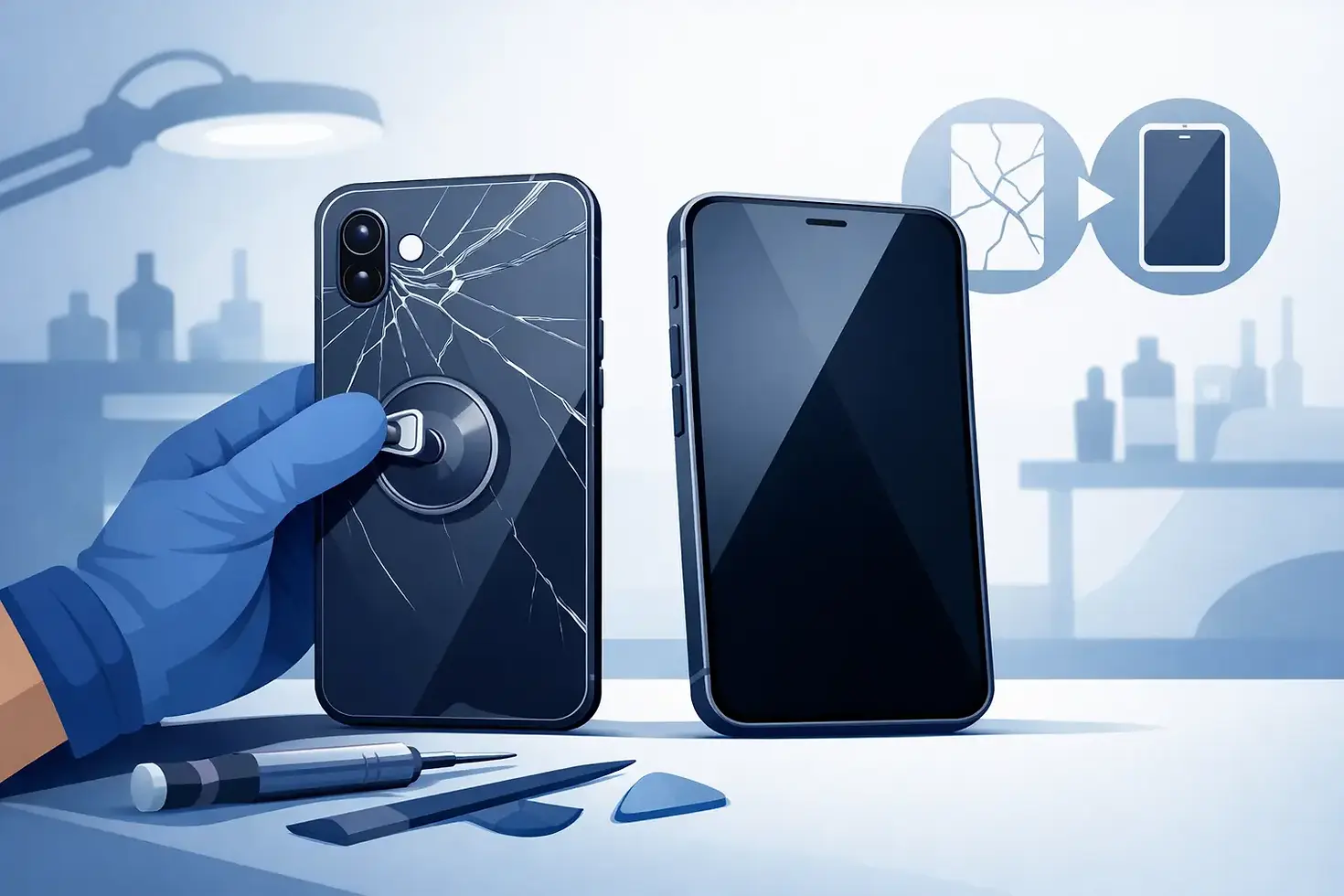
Does Back Glass Count as a Screen Repair?
A phone can still light up, swipe normally and make calls after a drop, yet the rear panel may be covered in sharp cracks. That often leads to one straightforward question: does back glass count as screen repair? Usually, no. Screen repair and back-glass replacement are separate services because they involve different parts, repair methods and costs.
Knowing the difference helps you ask for the right quote and avoid leaving a cracked rear panel to get worse. It also matters when you are dealing with a warranty, insurance claim or a device with more than one damaged area.
Does back glass count as screen repair?
In most cases, back glass does not count as screen repair. A screen repair fixes the display assembly at the front of the phone. Depending on the model, that assembly can include the glass you touch, the display underneath and touch-response components.
Back-glass repair deals with the rear housing or glass panel. It is the part around the camera area that protects internal components and gives the phone its finished look. On many newer mobiles, particularly iPhones and premium Samsung models, it is glass rather than plastic or metal.
If both sides are damaged, you will usually need two repairs: a screen replacement for the front and a back-glass replacement for the rear. A technician should clearly list each repair in your quote, including parts and labour, so there are no surprises.
There are a few exceptions. Some budget phones have a one-piece rear housing, which means the back panel may be replaced as part of a larger housing repair. Foldable devices also have more complicated screen and frame arrangements. Even then, it is best not to assume that a "screen repair" includes damage on the back of the device.
What a screen repair actually covers
A front screen repair is needed when the display has cracked, stopped responding properly, flickers, shows lines, has black spots or no longer turns on. The visible glass may be broken while the display still works, but it can also be damaged below the surface.
Modern phone screens are bonded assemblies. On many devices, replacing only the top glass is not practical or reliable. The usual repair is to replace the complete screen assembly, then test the display, touch response, brightness, cameras, speakers and fingerprint or face-recognition functions where relevant.
A screen repair may be the right job if you have any of these issues:
Cracks or chips on the front display
Dead pixels, coloured lines or dark patches
Touch areas that do not respond
A display that flashes, goes black or lifts from the frame
The rear glass is not part of that front display assembly. It may look like similar damage, especially after one hard drop, but it needs a different repair process.
What back-glass replacement covers
Back-glass replacement removes damaged glass from the rear of the phone and fits a new panel designed for that model. The technician also checks the camera lenses, frame and nearby components for damage caused by the impact.
This repair is more than cosmetic when cracks are spreading or glass is missing. A broken rear panel can leave sharp edges, collect dust and allow moisture closer to the phone's internals. It can also make wireless charging less reliable if the damage affects the charging area or the phone no longer sits flat on a charger.
On some phones, the rear glass is strongly bonded to the frame. Safe removal takes the right equipment and careful handling around the battery, cameras, charging coil and wireless antennas. Trying to peel it off at home can turn a rear-glass repair into a much larger job.
Camera glass is a separate issue too
The small glass covers over the rear cameras are related to the back panel, but they are not always included in a standard back-glass repair. If a camera lens cover is cracked, photos may look hazy, flare in bright light or lose focus. Tell the technician if the camera glass is damaged so it can be inspected and quoted correctly.
Why the distinction affects your repair quote
Screen repairs and back-glass repairs use different parts, tools and labour. That is why a price advertised for a cracked screen cannot automatically be applied to a cracked rear panel.
The make and model matter as well. An older device with a removable back may be quicker to repair than a recent flagship phone with bonded glass, cameras and wireless charging components. Availability of quality-tested parts can also affect turnaround time.
A clear quote should state whether it covers the front display, rear glass, camera lens cover, frame repair or any other fault found during inspection. If your phone was dropped and both sides cracked, ask for the total price to repair both at the same time. Combining work can sometimes be more practical than booking separate visits, particularly if the device needs to be opened for both repairs.
Will a cracked back affect how your phone works?
Not always straight away. Plenty of people continue using a phone with cracked rear glass because the screen, cameras and charging still appear normal. The risk is that small cracks can become larger with everyday pressure from a pocket, bag or car mount.
The bigger concern is protection. A phone with intact glass and seals has a better chance of keeping dust and splashes away from sensitive components. Once the back is cracked, do not rely on its original water-resistance rating. Even a small opening can compromise seals, and water damage is rarely predictable.
You should arrange an inspection sooner rather than later if the rear glass is loose, pieces are falling away, the phone is heating up, the battery is swelling, wireless charging has stopped working or a camera lens is exposed. If the battery appears swollen, stop using and charging the phone until it has been assessed.
Can you use a case until it is repaired?
A case can help contain loose fragments and reduce the chance of further cracking, but it is a temporary measure rather than a repair. Fit it gently so you do not press broken glass further into the housing. Avoid adhesive tape over camera lenses, charging areas or vents, as it can trap heat and leave residue.
Back up your phone as soon as possible if it is still working. A cracked rear panel does not automatically mean data loss, but a second drop or moisture exposure can make a minor repair much more disruptive. Keep the device dry, avoid wireless charging if the back is badly damaged, and handle it carefully until it is fixed.
Choosing the right repair service
When you book a repair, describe where the damage is rather than simply saying the phone is cracked. A quick explanation such as "the front display works but the back glass is shattered near the cameras" gives the technician a much better starting point.
Ask whether the quote includes parts and labour, what warranty applies to the repair, and how long the work is likely to take. For common models, many repairs can be completed the same day, but the exact timing depends on the device, extent of damage and parts availability.
At Gadget Xperts, technicians can inspect the phone, explain whether you need a screen repair, back-glass replacement or both, and provide a clear quote before work begins. That means you can make a practical decision without guessing what the word "screen" includes.
A cracked rear panel may not stop your day immediately, but it is worth fixing before a manageable drop becomes a camera, battery or water-damage problem. Bring the phone in for an assessment and get the repair matched to the damage that is actually there.


Comments